South Africa can learn from Finland’s beneficiation model – Minerals Council

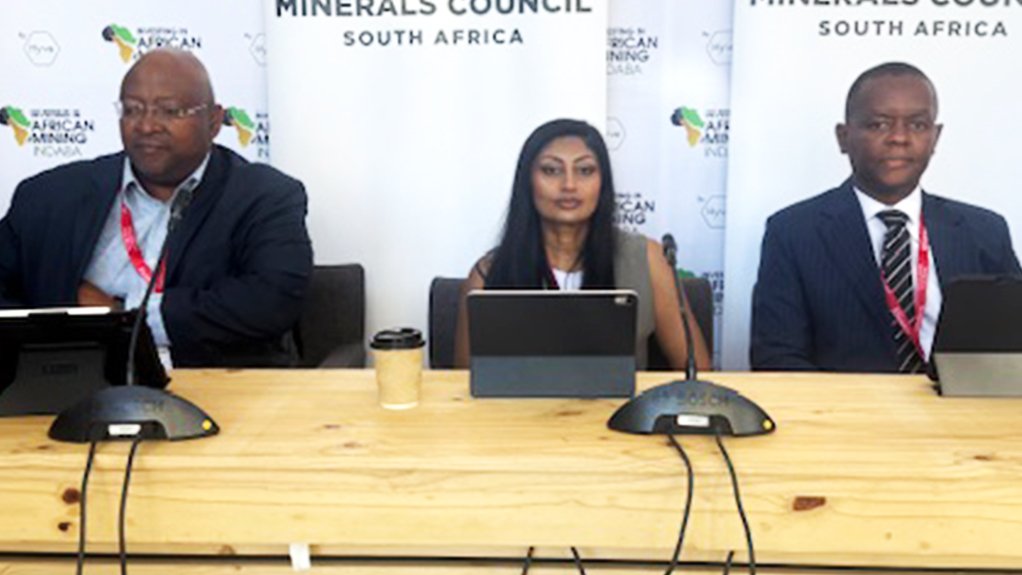


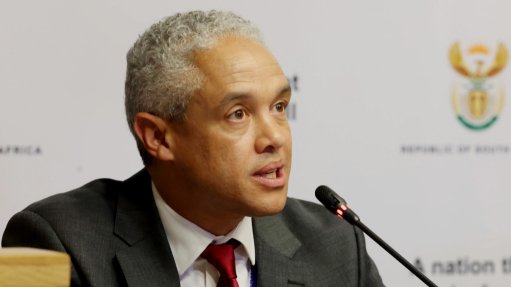
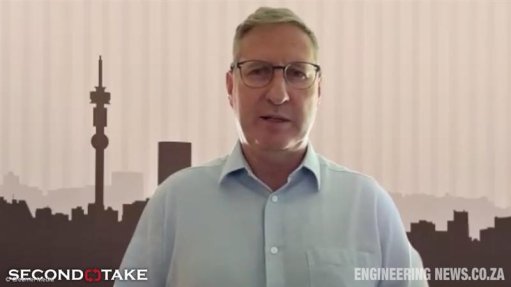
One of the countries South Africa can learn from when it comes to beneficiation is Finland, Minerals Council South Africa acting chief economist Bongani Motsa outlined on the third day of the Investing in African Mining Indaba earlier this month.
Speaking on a panel with Minerals Council senior executive: environment, health, and legacies Shamini Harrington and Minerals Council senior executive: public affairs and transformation Tebello Chabana, Motsa noted that Finland had pursued a deliberate strategy of mineral value addition, anchored in its National Mineral Strategy.
“Finland recognised that simply exporting raw ores would not maximise economic or technological benefits, so it invested heavily in downstream processing, research, and innovation.
“Finland’s approach emphasises aligning mineral development with the EU’s critical raw materials agenda, while also building domestic industrial capacity.
“This has meant fostering strong linkages between mining companies, technology developers, and universities, ensuring that minerals are not only extracted but also transformed into advanced products for batteries, clean energy systems, and hightech manufacturing,” Motsa spelt out.
Engineering News & Mining Weekly can report that Finland’s strategy also integrates sustainability, circular economy principles, and environmental safeguards, positioning Finland as a responsible supplier in global mineral chains.
The Finnish list of priority minerals reflects both domestic geology and global demand trends. It includes nickel, cobalt, lithium, graphite, and rare earth elements, alongside traditional strengths in copper, zinc, and platinum group metals. These minerals were chosen because of their importance in battery technologies, renewable- energy systems, and digital industries.
For example, Finland has become a European hub for battery precursor production, leveraging its nickel and cobalt resources, while also investing in refining lithium and developing recycling systems for critical materials.
By focusing on value addition, Finland has moved beyond being a raw material supplier to becoming a strategic player in the clean energy and technology value chains.
Instruments used by Finland to promote the link between its priority minerals and industrialisation are a combination of policy, institutional, and financial instruments to link its priority minerals with industrialisation.
The core policy instrument is the National Mineral Strategy, coordinated by the Ministry of Economic Affairs and Employment, which sets clear objectives for value addition and integration into the EU’s clean energy and digital transition.
Motsa described South Africa’s critical minerals and metals strategy as a good start.
Institutionally, Finland’s government has invested in research and innovation ecosystems, particularly through the Geological Survey of Finland and partnerships with universities, to ensure that mineral extraction is tied to advanced processing and technology development.
“As South Africa, we already have institutional capacity, the question is, to what extend will there be a deliberate resource injection to advance the aspirations of the critical minerals and metals strategy. In fact, this takes me to an important aspect that I need to mention. Except for a few aspects including . . . electricity tariff funding of R23.8-billion to R44.2-billion and the R400-million in exploration funding made by the IDC, generally the strategy is not costed,” Motsa pointed out.
Financially, Finland has used three broad instruments, including publicprivate investment entities, innovation funding, and EUbacked financing to derisk large capital projects. It has also embedded circular economy principles, encouraging recycling and secondary use of critical minerals to sustain industrial supply.
Together, these instruments have allowed Finland to move beyond raw mineral exports, positioning itself as a European hub for battery materials, clean energy technologies, and advanced manufacturing inputs.
Countries that have generally experienced sustainable economic growth, on average spend between 3% and 5% of GDP on research, development and innovation. In 2024, South Africa spent R56-billion, which is the equivalent of 0.8% of GDP.
“South Africa’s mineral wealth is undeniable. But wealth in the ground is not prosperity in society. By focusing on beneficiation, turning platinum into hydrogen fuel cells, manganese into battery materials, iron-ore into steel, coal into chemicals, and chrome into stainless steel, South Africa can transform its economy. All to solve the country’s problems – then we will be beneficiating for the right reasons.
“The choice before us is clear: remain a supplier of raw commodities or become a global leader in mineralbased industries. Beneficiation is not just an economic strategy - it is a national imperative,” Motsa highlighted.
One-Stop Licensing
The mining industry remained a foundational pillar to South Africa’s economic architecture, driving industrialisation, socioeconomic growth and job creation. Sustaining this paradigm called for a predictable, coordinated and enabling policy environment across mining, environmental and climate change frameworks, Harrington explained during the discussion in which Engineering News & Mining Weekly participated.
While coherent policies were critical in facilitating responsible mining, decarbonisation, investment and global competitiveness, the industry was currently constrained by fragmented policies, complex permitting procedures and administrative inefficiencies. This dissonance undermined certainty and elevated investment risk, Harrington added.
This challenge presents a clear opportunity for an integrated, one-stop licensing system.
A coordinated licensing framework – covering mining, environmental, water and land-use approvals – would significantly reduce fragmentation and uncertainty.
Article Enquiry
Email Article
Save Article
Feedback
To advertise email advertising@creamermedia.co.za or click here
Research Reports

Projects
Latest Multimedia
Latest News
Showroom

For over 60 years, VEGA has provided industry-leading products for the measurement of level, density, weight and pressure. As the inventor of the...
VISIT SHOWROOM
Immersive Technologies is the world's largest, proven and tested supplier of simulator training solutions to the global resources industry.
VISIT SHOWROOM

Press Office
Announcements
What's On
Subscribe to improve your user experience...
Option 1 (equivalent of R125 a month):
Receive a weekly copy of Creamer Media's Engineering News & Mining Weekly magazine
(print copy for those in South Africa and e-magazine for those outside of South Africa)
Receive daily email newsletters
Access to full search results
Access archive of magazine back copies
Access to Projects in Progress
Access to ONE Research Report of your choice in PDF format
Option 2 (equivalent of R375 a month):
All benefits from Option 1
PLUS
Access to Creamer Media's Research Channel Africa for ALL Research Reports, in PDF format, on various industrial and mining sectors
including Electricity; Water; Energy Transition; Hydrogen; Roads, Rail and Ports; Coal; Gold; Platinum; Battery Metals; etc.
Already a subscriber?
Forgotten your password?
Receive weekly copy of Creamer Media's Engineering News & Mining Weekly magazine (print copy for those in South Africa and e-magazine for those outside of South Africa)
➕
Recieve daily email newsletters
➕
Access to full search results
➕
Access archive of magazine back copies
➕
Access to Projects in Progress
➕
Access to ONE Research Report of your choice in PDF format
RESEARCH CHANNEL AFRICA
R4500 (equivalent of R375 a month)
SUBSCRIBEAll benefits from Option 1
➕
Access to Creamer Media's Research Channel Africa for ALL Research Reports on various industrial and mining sectors, in PDF format, including on:
Electricity
➕
Water
➕
Energy Transition
➕
Hydrogen
➕
Roads, Rail and Ports
➕
Coal
➕
Gold
➕
Platinum
➕
Battery Metals
➕
etc.
Receive all benefits from Option 1 or Option 2 delivered to numerous people at your company
➕
Multiple User names and Passwords for simultaneous log-ins
➕
Intranet integration access to all in your organisation